UG and PG programs | B.E – CET : E139 | M.Tech – PGCET : T962 | MBA – PGCET : B186
To serve as a hub of excellence in Artificial Intelligence and Machine Learning, offering high-quality education and research that addresses the demands of both industry and society.
PEO1: Skilled professionals in Artificial Intelligence and Machine Learning equipped to pursue careers across various domains and advance in higher education.
PEO2: Experienced in crafting inventive solutions for real-world challenges that are technically robust, economically feasible, and socially embraced.
PEO3: Adept at collaborating within teams and embracing emerging technologies in alignment with societal demands, all while upholding ethical principles.
PSO1: Co-design of hardware and hardware-software integration: Proficiency in recognizing, designing, simulating, analyzing, and constructing AI and ML models, utilizing contemporary engineering tools and programming languages.
PSO2: Specialized skills within a particular domain: The capability to function effectively in roles such as AI/ML Engineer, Data Scientist, Business Analyst, Product Analyst, Research Scientist, and Robotics Professional.
1. Transform Calculus, Fourier Series and Numerical Techniques
2. Data Structures and Applications
3. Analog and Digital Electronics
4. Computer Organization
5. Software Engineering
6. Discrete Mathematical Structures
7. Analog and Digital Electronics Laboratory
8. Data Structures Laboratory
1. Complex Analysis, Probability and Statistical Methods
2. Design and Analysis of Algorithms
3. Operating Systems
4. Microcontroller and Embedded Systems
5. Object Oriented Concepts
6. Data Communication
7. Design and Analysis of Algorithm Laboratory
8. Microcontroller and Embedded Systems Laboratory
1. Management and Entrepreneurship for IT Industry
2. Python Programming
3. Database Management System
4. Automata Theory and Computability
5. Principles of Artificial Intelligence
6. Mathematics for Machine Learning
7. Artificial Intelligence Laboratory
8. DBMS Laboratory with mini
9. project
1. Machine Learning
2. Digital Image Processing
3. Java for Mobile Applications
4. Machine Learning Laboratory
5. Digital Image Processing Laboratory with mini project
6. Mobile Application Development Laboratory
1. Advanced Artificial Intelligence
2. Advanced Machine Learning
3. Internet of Things
4. Fuzzy Logic& its Applications
5. AI and ML Application
6. Development Laboratory
1. Neural Networks and Deep Learning
2. System Modelling and Simulation
ICEAS
Artificial Intelligence
Computer Aided Manufacturing
Computer Integrated Manufacturing System
Computational Geometry
Robot Motion Planning
Robot Manipulators
The department is renowned for its strong technical foundation, state-of-the-art laboratories, and hands-on training aligned with global automation and robotics industry standards.
Students must have passed 10+2 with Physics, Chemistry, and Mathematics and must meet the admission requirements specified by ICEAS and the applicable entrance processes.
The department offers advanced labs including:
Analog and Digital Electronics Lab
Microcontrollers Lab
Fabrication Methods of Robotics Components Lab
PLC & SCADA Lab
Industrial Data Networks Lab
Industry 4.0 Lab
Virtual Instrumentation Lab
CAMD (Computer Aided Machine Drawing) Lab
Hydraulics and Pneumatics Lab
The department is supported by highly experienced Professors, Associate Professors, and Assistant Professors, bringing rich academic, research, and industrial expertise to the classroom and laboratories.
Graduates can work in robotics design, industrial automation, AI-driven systems, manufacturing, automotive, aerospace, IoT, and smart industry environments.
Yes. Students gain practical exposure through advanced labs, internships, industrial visits, workshops, and real-world industry projects.
Students learn Python, C, C++, MATLAB, ladder logic for PLCs, and scripting tools used in robotics and automation.
Yes. The department provides robotic arms, PLC modules, sensors, pneumatic systems, and automation kits for practical training.
Companies from automation, robotics, manufacturing, electronics, IT, and industrial engineering sectors recruit ICEAS students for a wide range of technical roles.
The dedicated Industry 4.0 Lab trains students in smart manufacturing, IoT automation, cyber- physical systems, and real-time machine data analytics.
Yes. Internships are actively supported, enabling students to gain industry experience and practical insights into automation systems.
Students receive hands-on training in MATLAB, SolidWorks, AutoCAD, LabVIEW, PLC programming
tools, robotic simulation software, and CAMD tools.
Yes. The department regularly offers certifications in PLC & SCADA, IoT, robotics programming, embedded systems, and automation technologies.
Projects include robotic arm development, autonomous vehicle prototypes, automation systems,
IoT-based monitoring, machine vision projects, and industrial control solutions.
Yes. Students take part in robotics competitions, hackathons, innovation challenges, drone events,
and technical expos.
Absolutely. The curriculum covers automation, robotics, sensor systems, IoT, CAD, machine vision, and modern manufacturing technologies.
Yes, programming is fundamental for robot control, automation, embedded systems, and data-
driven applications.
Automation focuses on controlling industrial processes, while Robotics deals with designing and
programming intelligent robotic mechanisms. ICEAS offers a blended curriculum covering both
domains.
Yes. Through industry-aligned projects, workshops, and collaborations, students work on practical industrial problem statements.
Yes, final-year projects often collaborate with companies working in automation, predictive analytics, and smart systems.
The placement cell provides pre-placement training, resume workshops, and conducts placement drives with partner companies.
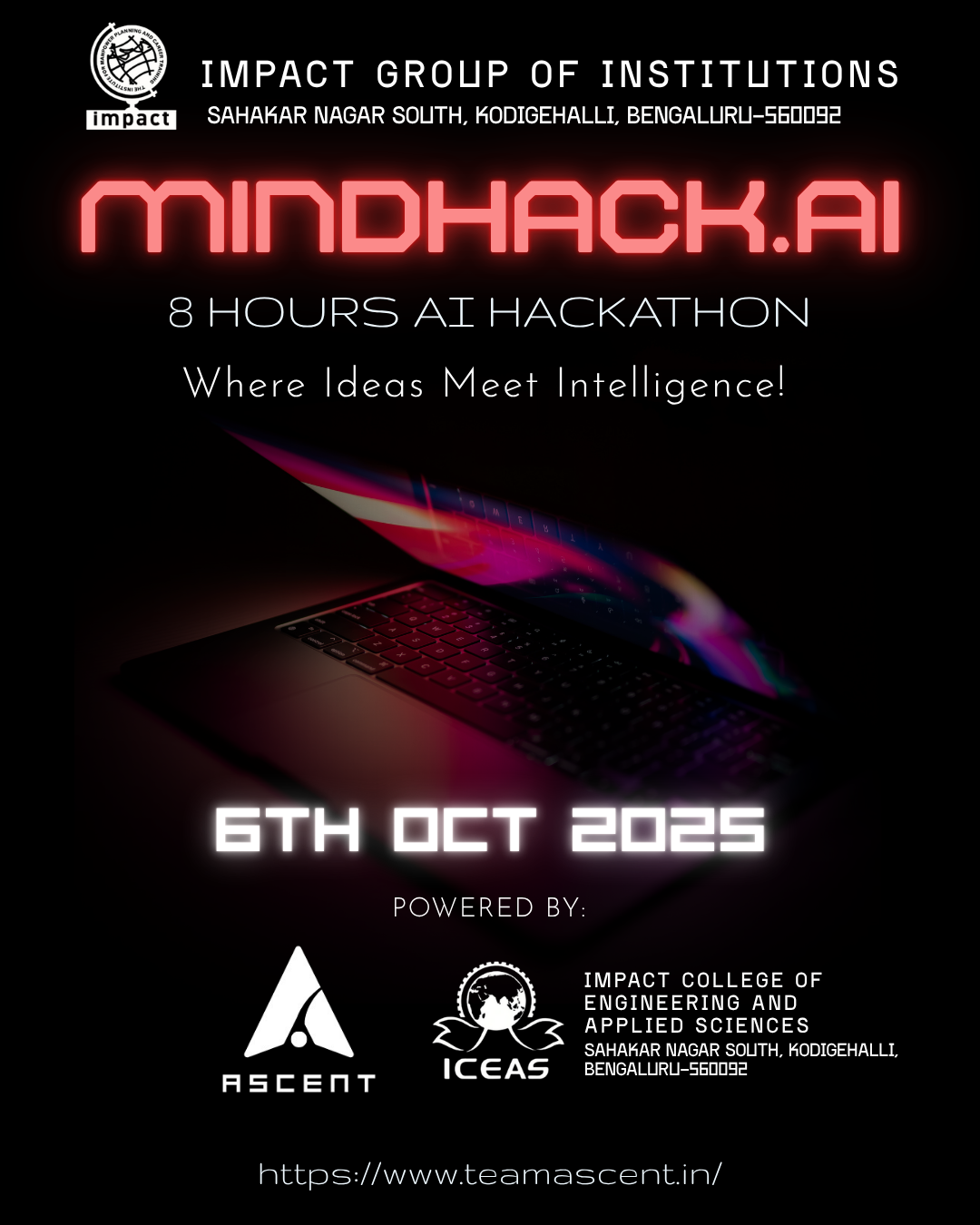
Yes, regular hackathons, coding marathons, and AI summits are held to enhance innovation.
Yes. Students and faculty engage in research on robotics, automation systems, AI, Industry 4.0 applications, embedded systems, and smart manufacturing.
Industries include automotive, aerospace, electronics, healthcare automation, logistics,
manufacturing, and IT technology sectors.
Yes. Regular workshops and seminars by industry professionals, researchers, and domain experts enhance student knowledge and industry exposure.
Salaries vary based on skills and industry but typically range from entry-level automation roles to high-paying robotics, IoT, and AI-based positions.
Yes. Students can join robotics clubs, technical societies, coding clubs, and innovation groups to enhance their practical abilities.
They learn PLC programming, industrial control logic, SCADA visualization, automation workflow, and real-time industrial applications.
Students study fluid power systems, actuators, pressure control, industrial pneumatic circuits, and automation using hydraulic drives.
Yes. Multiple mini-projects are assigned to build technical skills and encourage creativity throughout the program.
IoT is used to teach smart connectivity, machine monitoring, sensor networks, and real-time automation solutions.
ICEAS encourages innovation through incubation support, mentorship, prototype development guidance, and facilities for student-led projects.
ICEAS offers excellent faculty expertise, advanced labs, industry-driven curriculum, hands-on training, project-based learning, and strong placement support, making it one of the best choices for Automation & Robotics studies in Bengaluru.
Lorem ipsum dolor sit amet, consectetur adipiscing elit. Ut elit tellus, luctus nec ullamcorper mattis, pulvinar dapibus leo.

MBA Students Industrial visit to Bangalore Metro stations(25-08-2023) to know the startup issues – Entrepreneurship opportunities and Challenges
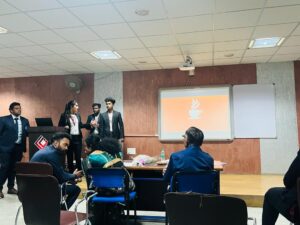
MBA students Participated in the “Business plan-Inter collegiate competition” -ideate 2023 held in Koshys college(28-09-23)-To orient on Business Planning and Launching an Enterprise

Industrial visit to Coorg Coffee Estate -to make the aware Coffee industry and opportunities(27-29, October 23)
ICEAS
Welcome to the ICEAS Admission Cell. Please fill in the application form below, ensuring all mandatory details are completed. Submit the form, and our team will contact you.
ICEAS




"*" indicates required fields