UG and PG programs | B.E – CET : E139 | M.Tech – PGCET : T962 | MBA – PGCET : B186
Cybersecurity is tailored to meet the growing need for proficient security professionals in both the public and private sectors, encompassing expertise in Data Security as well as Network/Cloud Security domains.
The curriculum includes fundamental computer science topics alongside specialized cybersecurity courses. The program focuses on fostering students with the requisite knowledge and abilities to safeguard computer systems, identify and analyze threats and attacks, respond effectively, and formulate security policies, procedures, and standards.
The undergraduate program spans four years and provides a solid foundation in Basic Sciences, Mathematical Principles, Cybersecurity, Cryptography, Network Security, Secure Programming, and Ethical Hacking.
The designed curriculum instills 21st-century skills through various components: Liberal education for holistic development, courses fostering contemporary skills, project-based learning, specialized topics with expert mentoring, opportunities for Massive Open Online Courses (MOOCs), undergraduate research projects, product development, and internships. It emphasizes liberal arts, foundation courses, professional subjects, and electives to cultivate expertise in specialized domains. Additionally, the curriculum underscores design-oriented thinking, communication, collaboration, and creativity from the first year onward.
To offer dedicated and proficient faculty alongside educational infrastructure to impart both theoretical knowledge and practical skills in cybersecurity to the emerging generation.
To Set up Memorandums of Understanding (MoUs) in collaboration with the Information Technology sector to produce cybersecurity graduates equipped with industry-ready skills and a cultivated research mindset, fostering the sustainable development of young learners.
To Establish an environment for project-based learning that prioritizes collaboration and teamwork, aimed at tackling global challenges while upholding human and ethical values.
Motivate young individuals to educate society and ensure nationwide human safety and security in the digital realm.
To serve as a hub of excellence in Artificial Intelligence and Machine Learning, offering high-quality education and research that addresses the demands of both industry and society.
PEO1: Tackle real-world problems and challenges within the field of cybersecurity.
PEO2: Create, analyze, assess, and implement resilient and secure cyber-physical systems to fulfill specified requirements.
PEO3: Efficiently operate across various sectors such as academia, industry, research and development, entrepreneurship, and startup initiation, either independently or collaboratively, leveraging interpersonal skills.
PEO4: Uphold ethical standards in professional conduct, societal interactions, and environmental considerations.
PSO1: Acquire proficiency in comprehending, analyzing, and creating computer programs within domains such as networking, cryptography, web development, and database management, following the software development life cycle.
PSO2: Possess the capability to formulate strategies for safeguarding data, resources, and assets of organizations, processes, individuals, and communities utilizing Cybersecurity-focused expertise.
ICEAS
Students can work as Security Analysts, Ethical Hackers, Security Engineers, Forensic Experts, and Compliance Officers.
Industries like banking, defense, IT, telecom, and e-commerce actively hire cybersecurity specialists.
Skills include ethical hacking, network defense, cryptography, malware analysis, and penetration testing.
Tools like Wireshark, Metasploit, Kali Linux, Burp Suite, and Nessus are taught.
Yes, Cyber Labs equipped with simulation and testing tools are provided.
Yes, Cyber Labs equipped with simulation and testing tools are provided.
Yes. Cyber security is one of the fastest growing fields globally due to the rise in cyber attacks, digitalization, cloud adoption, and AI-driven threats.
Yes. Most colleges partner with IT companies, cybersecurity firms, and start-ups offering internships in SOC operations, security testing, and vulnerability analysis.
Yes. Students gain hands-on experience through:
Cyber labs
Penetration testing simulations
Real-time attack-defense scenarios
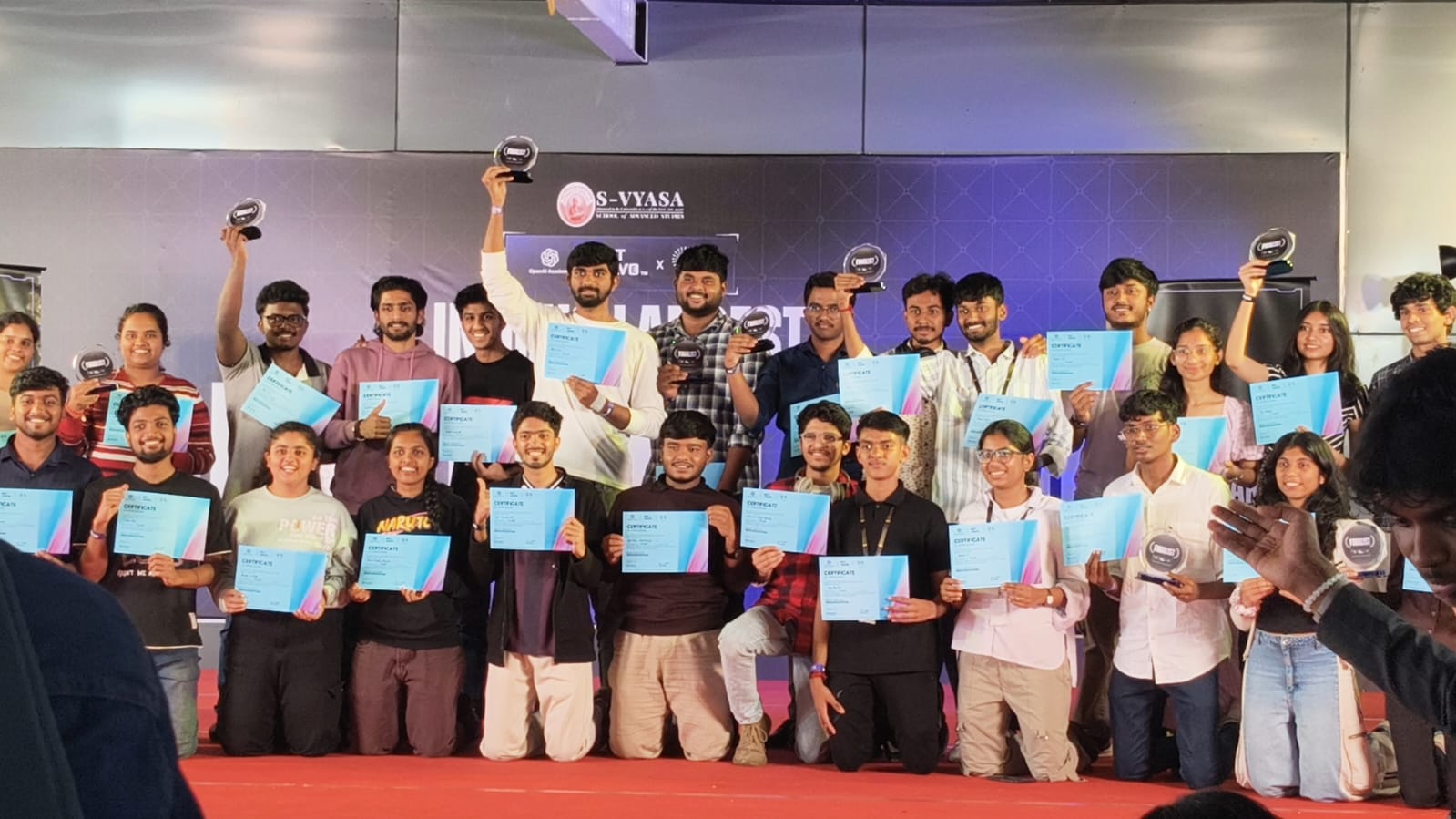
Workshops & hackathons
Graduates earn average packages of ₹6–12 LPA with top security firms and MNCs.
Yes, internships with cybersecurity firms or government agencies are mandatory.
Regular workshops and Capture The Flag (CTF) competitions are conducted.
Students can pursue M.Tech in Cyber Security, Information Assurance, or Digital Forensics.
Yes, digital evidence handling and investigation are part of the curriculum.
Lorem ipsum dolor sit amet, consectetur adipiscing elit. Ut elit tellus, luctus nec ullamcorper mattis, pulvinar dapibus leo.

MBA Students Industrial visit to Bangalore Metro stations(25-08-2023) to know the startup issues – Entrepreneurship opportunities and Challenges
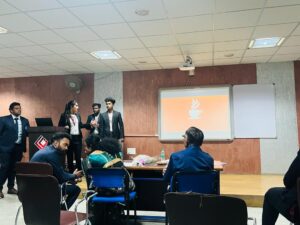
MBA students Participated in the “Business plan-Inter collegiate competition” -ideate 2023 held in Koshys college(28-09-23)-To orient on Business Planning and Launching an Enterprise

Industrial visit to Coorg Coffee Estate -to make the aware Coffee industry and opportunities(27-29, October 23)
ICEAS
Welcome to the ICEAS Admission Cell. Please fill in the application form below, ensuring all mandatory details are completed. Submit the form, and our team will contact you.
ICEAS




"*" indicates required fields